How I baby my newly planted dahlias through spring storms, and when I finally stop worrying
There’s a particular kind of stress that only plant moms (and dads) understand: standing at the window watching the heavy rain roll in right after you’ve planted your dahlias.
The weather app says three straight days of soaking rain.
Your tiny sprout just emerged yesterday.
Your tender shoots have barely established themselves in their pots.
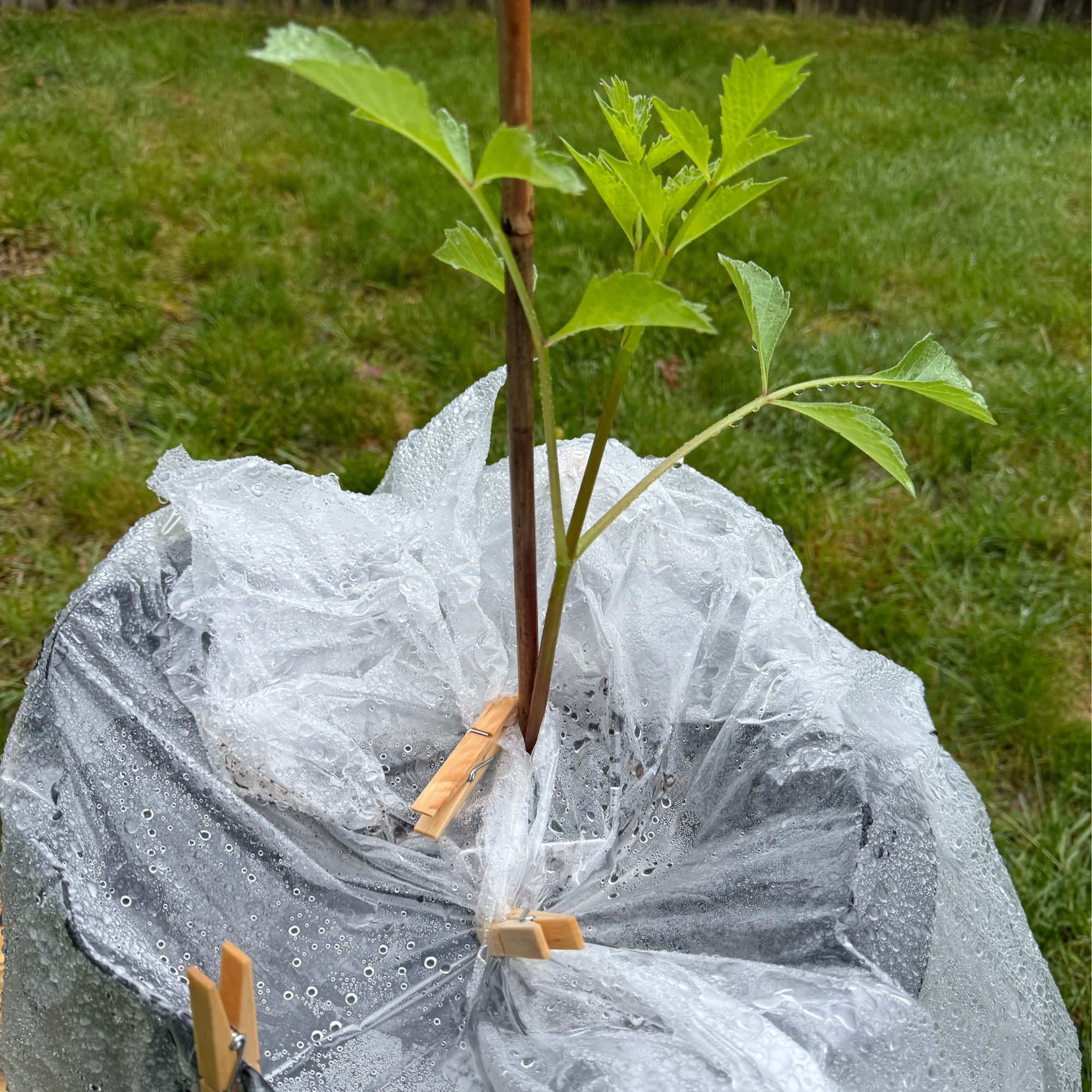
Suddenly you’re outside in pajamas, clipping plastic bags over containers.
Honestly? Sometimes that’s exactly what happens here.
While established dahlias are surprisingly resilient, newly planted tubers and young container-grown plants are much more vulnerable to heavy rain early in the season. In containers especially, spring rain can quickly turn potting mix into a cold, soggy sponge, the exact conditions that encourage rot before the plant has had a chance to develop a strong root system. Experts consistently emphasize that dormant or newly planted dahlia tubers are most at risk when soil stays cold and saturated for extended periods.
A few years ago I lost a lot of young plants to what seemed like a never-ending rain cycle. It was a sad summer. Since then, I’ve developed a mix of practical precautions and “good enough gardening” that helps me protect my container dahlias without completely losing my mind every time it rains.
Why Heavy Rain Can Be a Problem for Dahlias in Containers
The danger usually isn’t one afternoon thunderstorm.
The real issue is prolonged saturation, especially before the plant is actively growing.
Dahlia tubers are fleshy storage organs, and if they sit too long in cold, waterlogged soil, they can begin to rot before they’ve fully rooted or sprouted. Multiple dahlia growing guides recommend holding back on watering newly planted tubers specifically to avoid rot in overly wet soil. If you’re a weekend gardener like me, you can’t always wait for the perfect patch of dry days. Especially in the early spring when it seems every weekend is wash out.
This where containers can sometimes help because excess water drains more quickly than in heavy garden soil, if the potting mix and drainage are good.
But in early spring, when temperatures are still cool and the roots are immature, even containers can stay wetter than you’d think.
That’s when I start paying attention.
What I Actually Do Before Heavy Rain
1. Move Smaller Containers Under Cover
If the pots are still manageable, I simply move them.
A covered porch, inside my little urban greenhouse, or even tucked under a table can make a huge difference during multi-day downpours.
I don’t do this for every container all season long. Mostly just:
- newly planted tubers
- fresh cuttings
- tiny emerging sprouts
- varieties I’m especially emotionally attached to (which honestly is all of them!)
Once the plants are larger and actively growing, I can stop hauling pots around every time it rains.
2. Cover the Soil Surface — Not the Entire Plant
For containers that are too heavy to move, I sometimes loosely cover the base of the plant during especially intense rain events.
Usually this means:
- a clear plastic bag clipped around the rim of the pot
- a piece of plastic sheeting loosely draped over the soil
- occasionally an overturned bucket or tote during severe storms
The goal isn’t to create a sealed environment. It’s simply to reduce how much water is continuously soaking the potting mix.
One important lesson: avoid tightly sealing containers for long periods. Trapped moisture and lack of airflow can actually increase rot problems.
In days of prolonged rain, I’ll pop out during a lull and carefully lift the plastic to drain the water away. I also remove the coverings as soon as the storm passes so the soil can breathe again.
3. Prioritize Drainage More Than Rain Protection
Honestly, the best long-term protection usually happens before the rain even arrives.
A few things matter enormously:
- high-quality potting mix
- large drainage holes
- elevated pots
- avoiding saucers that trap standing water
- not overwatering before storms
Dahlias hate sitting in soggy soil more than they hate rain itself. Most growing guides emphasize that drainage is the key factor in preventing tuber rot.
If a container drains quickly, established dahlias can usually handle normal summer storms just fine.
4. Stake Early, Before Storm Season Hits
Once dahlias start putting on real growth, heavy rain becomes less about rot and more about broken stems.
Dahlia stems are hollow and surprisingly easy to snap during wind and rain, especially dinnerplate varieties.
Now I try to stake early instead of waiting until plants are already huge and leaning dramatically after a storm.
It’s much easier on me and the plant.
When I Stop Worrying About Covering Them
This is the good news.
Once dahlias:
- have several sets of leaves
- are actively growing
- have established roots
- and temperatures are consistently warm
…I mostly let them deal with weather on their own.
At that point, the plant is actively using moisture, and the risk of rot drops significantly. In fact it’s a blessing to have a little break from my watering duties.
By early summer, I usually stop covering containers altogether unless:
- we’re expecting extreme flooding rain
- the pots are poorly sheltered
- or the forecast includes severe wind and hail
Mature dahlias are tougher than we give them credit for.
The Bigger Gardening Lesson
Every year I tell myself I’ll relax about spring weather.
Every year I still find myself wandering outside in the rain to check on my pots.
But gardening always seems to involve this strange balance between protecting and letting go.
You do your best:
- move what you can
- cover what feels vulnerable
- improve drainage
- stake early
- then trust the plants to figure out the rest
And most of the time, they do.
Sometimes better than we expect.