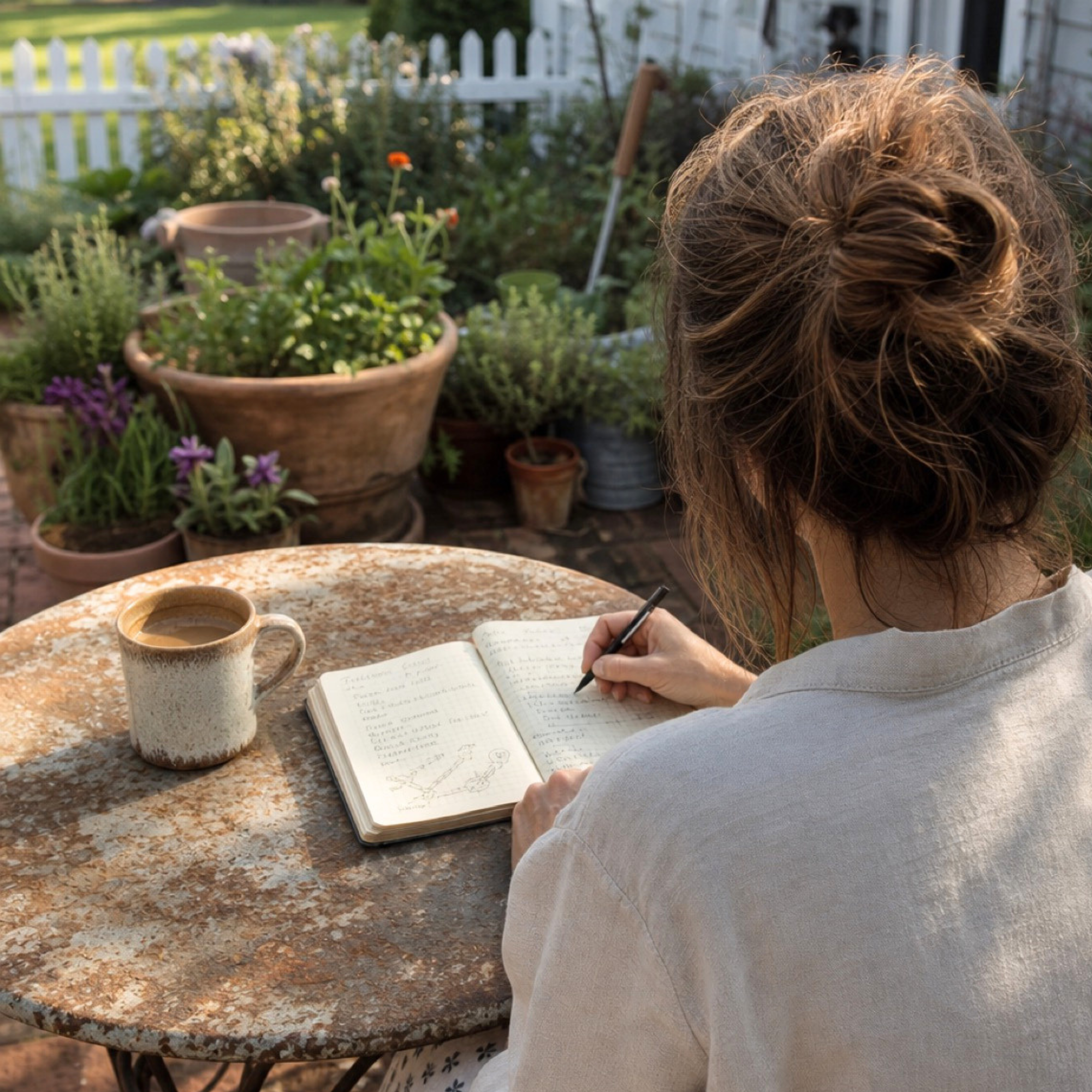
There is a moment that happens to almost every gardener.
You stand in front of a plant that is thriving, or struggling, and think:
“What did I do last year?”
Which fertilizer worked?
When did I plant this?
Where did I buy those dahlias?
When did the aphids show up?
Did this variety bloom early or late?
You know the answer existed at one point. You just can’t remember it now.
That’s why I keep a garden journal.
And before you get the wrong idea, let me say this: I am a firm believer in keeping things simple. My downtime is precious, and I don’t want recording or reflecting to become another chore. The garden provides plenty of those already.
When I first started journaling, I thought it was simply a place to record planting dates and garden tasks. Over time, I’ve realized it’s something much more valuable. It becomes a record of both the garden and me.
And if you’re like me, someone who believes gardening is about more than just growing flowers, it can also become a place to slow down, reflect, and pay attention to the season unfolding around you.
Your Garden Has a Memory
One of the biggest benefits of keeping a garden journal is that it allows you to learn from your own experience instead of starting from scratch every spring.
Every garden is unique.
Your soil is different.
Your microclimate is different.
Your growing conditions are different.
Online advice can be incredibly helpful, but the most valuable gardening information you’ll ever collect comes from your own garden.
A journal helps capture that information before it’s forgotten.
What I Track in My Garden Journal
My journal isn’t complicated.
Some days it’s just a few notes.
Other days it’s a full page of observations.
Here are a few things I record throughout the growing season.
Plant Varieties and Vendors
If you’re growing dahlias, this becomes especially important.
I track:
- Variety names
- Tuber suppliers (This is hugely helpful when spring arrives and Dahlia Fever inevitably kicks in. Trust me, it will.)
- Purchase dates
- Bloom performance
- Vase life
- Whether I would grow it again
A beautiful Instagram photo might convince me to buy a variety, but my journal reminds me whether it actually performed well in my own garden.
Fertilizing Records
One of the easiest things to forget is what you fed your plants and when.
I keep simple notes such as:
- Fertilizer used
- Application date
- Results observed
- Any issues that followed
Over time, these notes help identify what supports healthy growth and strong blooms in my specific growing conditions.
Pest and Disease Notes
This may be the most valuable section of my journal.
Many pests appear around the same time each year.
By recording:
- When aphids first appeared
- When spider mites became active
- Weather conditions
- Treatments used
- Whether those treatments worked
you begin to recognize patterns before problems become severe. More importantly, you’re ready when they return.
Weather and Seasonal Conditions
No two growing seasons are the same. A cool spring, a June heat wave, weeks of heavy rain.
These events often explain success or failure better than anything else.
The Part Most Garden Journals Forget
Many garden journals focus solely on planning and record-keeping.
But in doing so, I think they miss something really important.
Gardens are not just projects. They’re experiences.
Some of my favorite journal entries have nothing to do with fertilizer schedules or bloom counts.
They’re notes like:
- What it felt like when my first Café au Lait opened
- The hummingbirds that visit the garden
- Morning coffee under the gazebo on a rainy day
- What the garden teaches me about patience
These moments may not show up on a planting chart, but they’re often the reason we keep gardening.
They’re worth remembering too.
Garden Journaling as a Slow Living Practice
One reason I created The Growing Season journal is because I wanted a place for both.
A place to track practical information.
And a place to capture the feeling of the season.
Gardening naturally encourages us to slow down.
Flowers bloom on their own timeline.
Seeds germinate when they’re ready.
Dahlias teach patience whether we want the lesson or not.
A garden journal helps us notice those small moments instead of rushing past them.
It becomes less about documenting tasks and more about paying attention.
Start Simple
If you’ve never kept a garden journal before, don’t overthink it.
Start with:
- Today’s date
- What you planted
- What is blooming
- What you’re noticing
- One sentence about how the garden made you feel
That’s enough.
Over time, those small notes become a record of an entire growing season.
And eventually, a collection of seasons.
Years from now, you’ll be grateful you wrote them down.
Because flowers fade, gardens change, and every growing season eventually comes to an end.
But the stories of those seasons don’t have to disappear with them.
Looking for a simple place to keep track of both your garden notes and your growing season memories? The Growing Season was designed for gardeners who want practical planning, thoughtful reflection, and a beautiful record of the season they’ll want to revisit year after year.