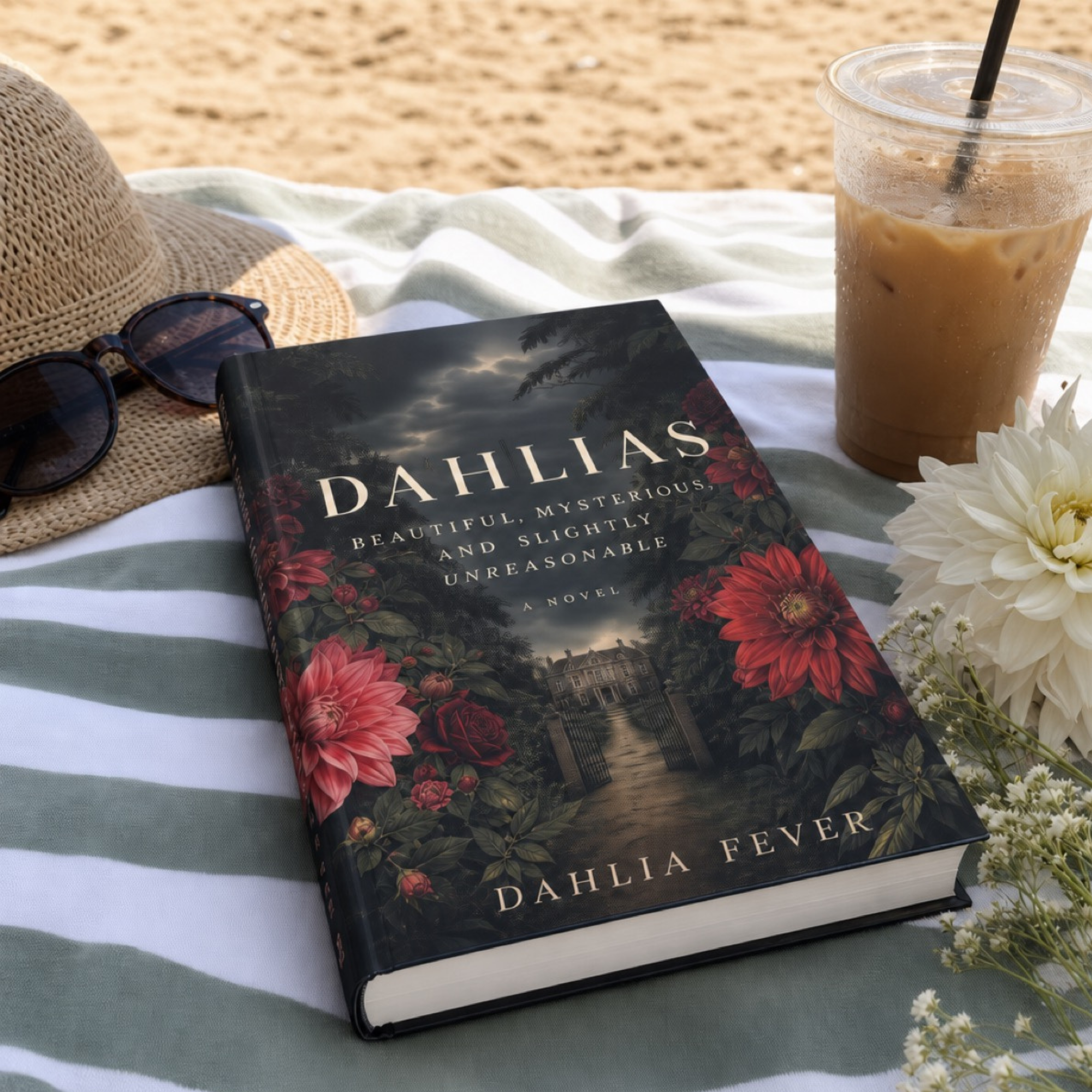
A few weeks ago, while working on my never-quite-finished mystery novel, I found myself stuck on a plot problem.
I needed a character who was beautiful, dramatic, and could inspire obsession, poor decision-making, and financial ruin.
Then I looked out the window at my dahlias. Problem solved.
As a self-confessed dahlia addict and aspiring mystery writer, I’ve begun to suspect these two obsessions have more in common than I may have realized.
Summer is reading season. Some people pack romance novels for the beach. Others choose historical fiction or memoirs. I always reach for the mysteries and thrillers.
And when you’ve read as many mysteries as I have, you notice something curious.
Flowers show up everywhere.
Roses. Lilies. Secret gardens. Poison gardens. Flower farms hiding secrets.
Coincidence? I don’t think so.
But if there is one flower that truly belongs in a mystery novel, it’s the dahlia.
Not because dahlias are dangerous—though my bank account would disagree—but because they have a way of turning a sensible weekend gardening hobby into a full-blown obsession.
Every spring, dahlia growers participate in an incredible display of optimism.
We bury these oddly shaped, funky, sometimes wrinkled, sometimes downright ugly tubers in pots and garden beds.
We withhold water, monitor the weather, and spend days staring at the soil like an amateur detective at a crime scene.
Will they sprout?
Did I plant that one upside down?
Did I mix up the labels?
Was this the pot with Café au Lait or Labyrinth?
The clues are limited, but the suspense is real.
A mystery novel couldn’t ask for a better opening chapter.
And then there are the names.
Night Silence.
Shadow Cat.
Black Satin.
Labyrinth.
These are not
flower names.
These are suspects gathered at a sprawling country estate during a thunderstorm waiting for the detective to arrive.
“Bloomquist York was looking suspicious near the greenhouse.”
Once the season gets underway, the plot really thickens. One day your dahlias are thriving; the next they’re dramatically wilted because you missed a watering.
You rush outside in a panic, apologize profusely, water deeply, and spend the next ten minutes questioning all of your life choices.
By evening they’ve recovered completely and are behaving as though nothing ever happened.
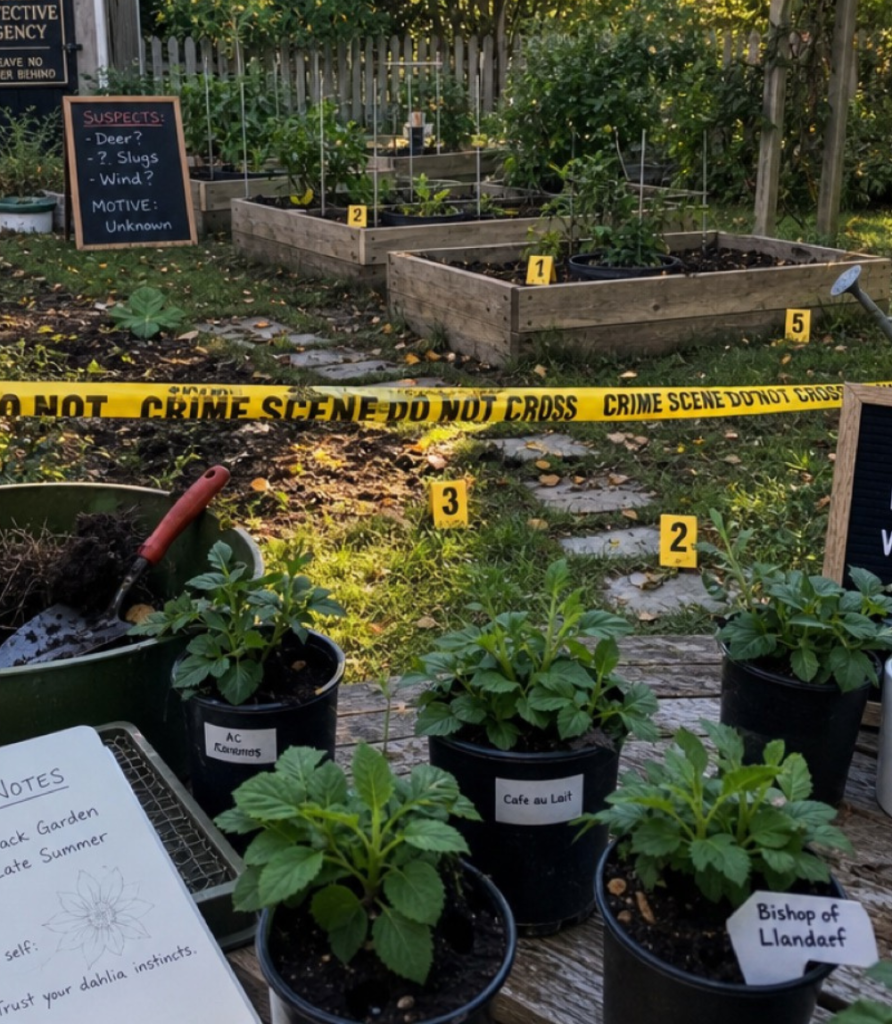
It’s really hard not to take this personally.
Just when you think you’ve got things under control, a new twist is introduced.
A heat wave.
A mystery pest.
A bloom so amazing it makes you forget all the frustration that came before it.
The longer I work on my novel, the more I realize great mysteries, like great dahlias, rely on the same principle: you can’t reveal everything at once.
Maybe that’s why I spend my mornings wandering through the garden checking on dahlias and my evenings working on my book.
They’re essentially the same hobby.
Both keep me guessing.
Both test my patience.
Both reward persistence.
And both have led me to stare at something for far longer than a reasonable person should, wondering whether something wonderful—or disastrous—might happen next.
And, maybe that’s why dahlia fever is such a thing.
Not because dahlias are easy or predictable, but because they’re an endless challenge.
Every season begins with a mystery.
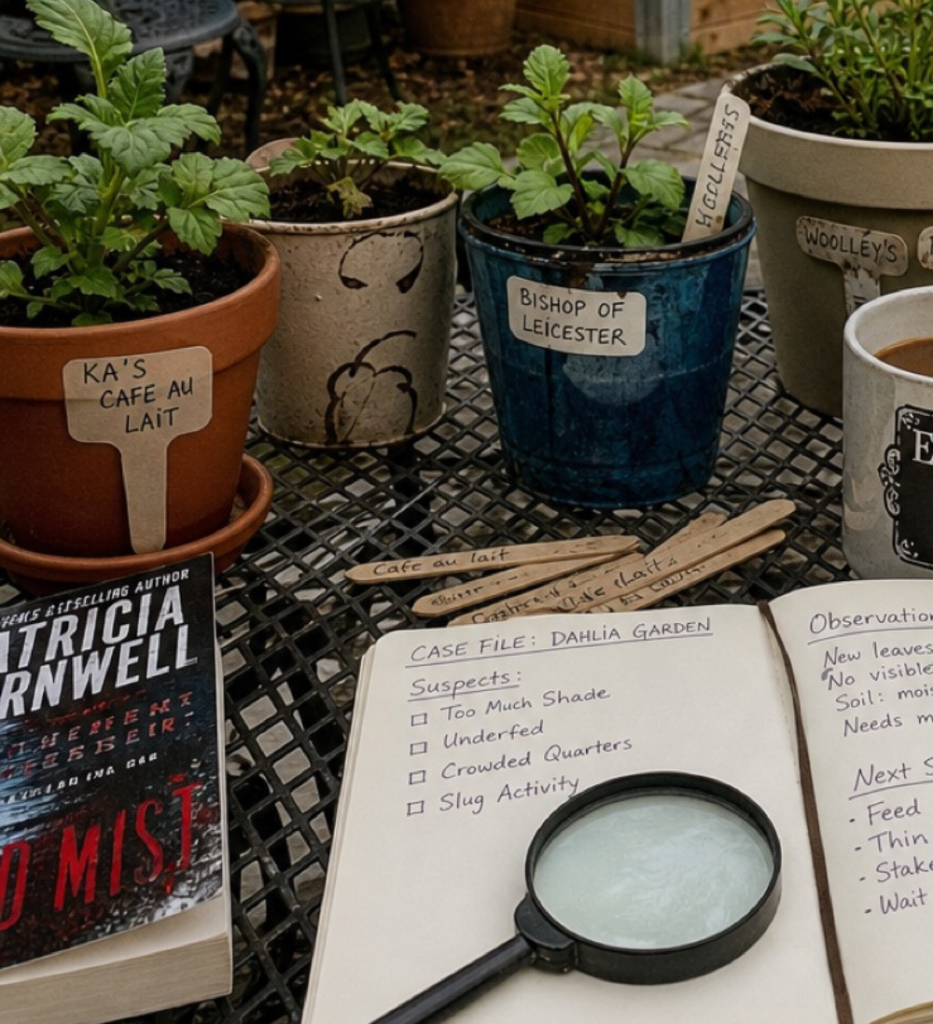
Every fresh set of leaves feels like a clue.
Every plant culled for a virus feels a little bit like a murder.
And every gardener, whether they’ll admit it or not, spends the summer wondering what happens next.
That’s why I think mysteries and dahlias go together so well.
Slightly unreasonable.
Incredibly dramatic.
And somehow impossible to put down.
If you also suspect your garden has become a little too dramatic, grab the free Dahlia Fever Growing Season Tracker below and keep tabs on the plot twists.