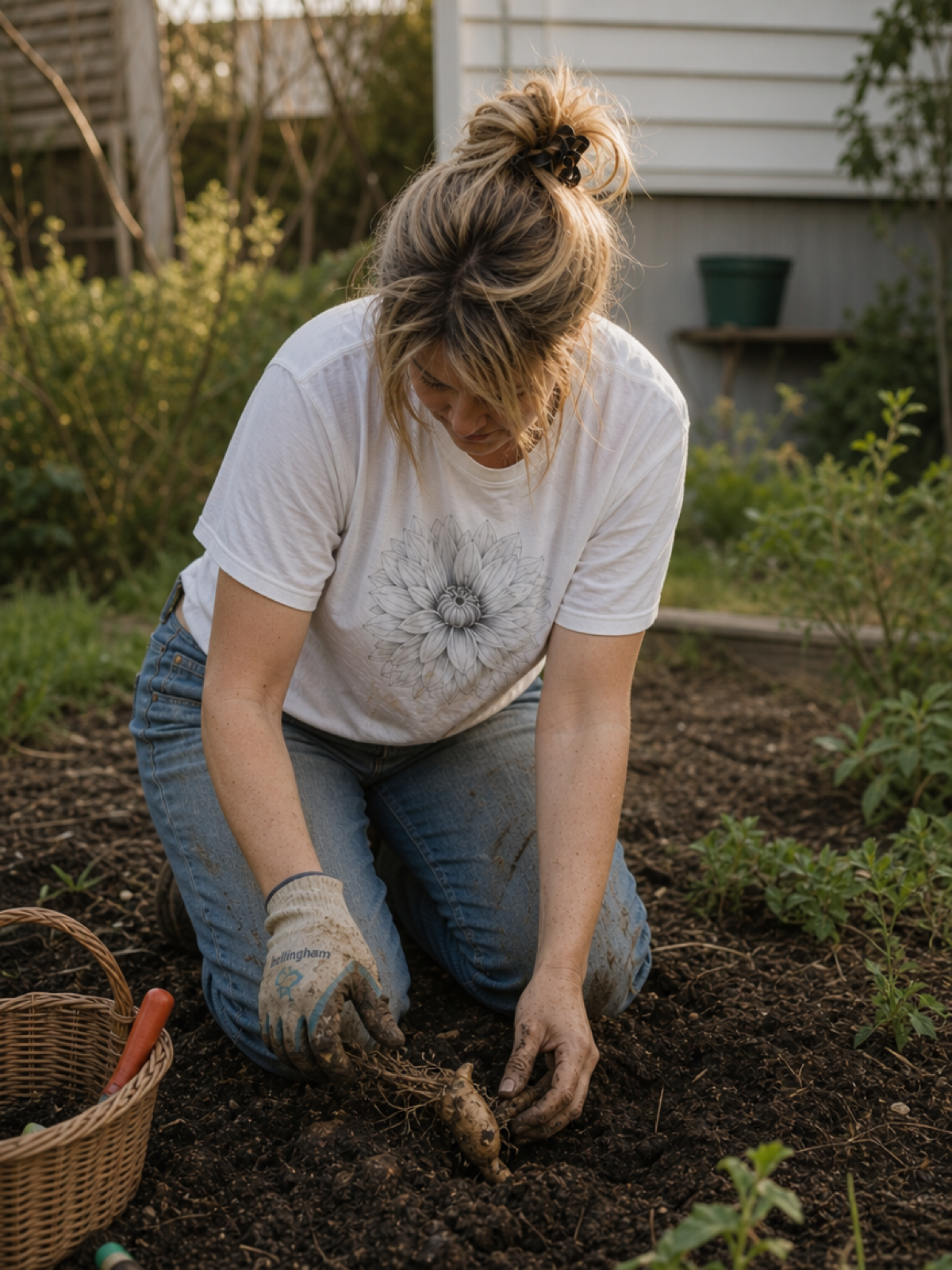
I started growing dahlias more than ten years ago. Back then, I’d pick up a few tubers from the local garden center each spring and, I hate to admit it, I treated them like annuals. Once I learned you could dig them up, store them, and replant them year after year, it completely changed the way I gardened.
I’m planting more than thirty different dahlia varieties this year, because honestly, I just couldn’t resist the urge to add one more, than another, then another. But it will be worth it. There’s nothing better than watching the yard slowly come alive with those first blooms of summer. (If you’re as obsessed as I am, you’ll understand why I designed a Dahlia Names tee covered in cultivar names — because we really do love them all.)
I’m paying more attention to fertilizing this year than I have in the past. I’m hoping for taller plants, stronger stems, and bigger blooms, so this year I actually did some research before reaching for the fertilizer bag.
The best place to start is actually with a soil test. Your local extension office can usually help with this, and some garden centers offer basic testing as well. A soil test will tell you exactly what your plants need before you start adding fertilizers or amendments.
But to be honest, I’m skipping that step this year. It’s worth noting that most of my dahlias grow in containers, with just a few in raised beds — so this plan is built around that. Container growing means nutrients wash out faster with every watering, so feeding consistently matters more than it would in the ground.
If you ask five seasoned dahlia growers how to fertilize, you’ll probably get five completely different answers. Everyone seems to have their own tried-and-true method.
Here’s the simple fertilizing plan I’m following this year:
1. Refreshing Old Potting Soil
For some containers, I’m reusing potting soil from last year — but only after checking it’s free of crown gall. Crown gall is a bacterial disease that shows up as rough, warty growths on the roots or base of the tuber. If you spot any, it’s best to toss that soil and start fresh, since the bacteria can linger and reinfect new plants.
I’ll refresh clean soil with fresh compost and worm castings and a bit of vermiculite to add nutrients and improve the soil’s structure before planting.
2. Starting with Fresh Potting Mix
For other pots, I’m using fresh potting mix. One thing I’ve learned: potting mix and garden soil are not interchangeable. Garden soil is too dense for containers, while potting mix is designed to drain properly and keep roots healthy in pots.
This year I splurged a little on Coast of Maine Bar Harbor Blend for waking up my tubers, and I’ll mix that with Sta-Green Potting Mix with fertilizer when I move plants into their larger summer containers.
3. Feeding for Sturdy Stems and Healthy Foilage
Dahlias are heavy feeders, and in containers the nutrients can wash out quickly. After the first thirty days, I’ll add in some Alaska Fish fertilizer, 5-1-1 to give just a bit more kick to help the foliage. Starting a little earlier than I have in past years should help build stronger stems before the plant puts all its energy into blooming.
For this step, you will want to water your dahlia first. It’s never a good idea to add this mix to dry soil. To prepare, mix 1 tablespoon of the Alaska Fish fertilizer to a gallon of water and pour about 1 cup around the plant, about 4 inches away from the stem. I’ll repeat this every fifteen days until the first buds appear.
On planting days, I usually end up in one of my Dahlia Fever garden tees — easier to justify another hour in the dirt when you’re dressed for it.
4. Feeding for Bloom Production
Once I see the first buds forming, I’ll switch to Sunniland Bloom Special 2-10-10 fertilizer, which is lower in nitrogen and higher in phosphorus and potassium. This will support blooming instead leafy growth.
I’ll again feed every two weeks, and water well in between to prevent any buildup. This should translate into those big, vibrant flowers we all love so much.
4. Stopping Fertilizer Before Fall
By late August or early September, I’ll stop fertilizing altogether and let the plants begin slowing down naturally as the season winds down and tubers prepare for dormancy.
At the end of the day, gardening is always a little bit of experimenting. This is the most intentional I’ve been about fertilizing since I started growing dahlias, and I’m genuinely curious to see if it makes a difference. I’ll be watching for stronger stems, deeper color, and longer vase life this season, and I’ll report back once the blooms start coming in. If you have a fertilizing routine that works for you, I’d love to hear it in the comments.
If you want to track what’s working (and what isn’t) in your garden, the Growing Season Journal is a simple way to log it all as the season unfolds.I started growing dahlias more than ten years ago. Back then, I’d pick up a few tubers from the local garden center each spring and, I hate to admit it, I treated them like annuals. Once I learned you could dig them up, store them, and replant them year after year, it completely changed the way I gardened.
I’m planting more than thirty different dahlia varieties this year, because honestly, I just couldn’t resist the urge to add one more, than another, then another. But it will be worth it. There’s nothing better than watching the yard slowly come alive with those first blooms of summer. (If you’re as obsessed as I am, you’ll understand why I designed a Dahlia Names tee covered in cultivar names — because we really do love them all.)
I’m paying more attention to fertilizing this year than I have in the past. I’m hoping for taller plants, stronger stems, and bigger blooms, though if you ask five seasoned dahlia growers how to fertilize, you’ll probably get five completely different answers. Everyone seems to have their own tried-and-true method.
The best place to start is actually with a soil test. Your local extension office can usually help with this, and some garden centers offer basic testing as well. A soil test will tell you exactly what your plants need before you start adding fertilizers or amendments.
But to be honest, I’m skipping that step this year. Most of my dahlias are grown in containers, with just a few planted in raised beds. Here’s the simple fertilizing plan I’m following this year:
1. Refreshing Old Potting Soil
For some containers, I’m reusing potting soil from last year — but only after checking it’s free of crown gall. Crown gall is a bacterial disease that shows up as rough, warty growths on the roots or base of the tuber. If you spot any, it’s best to toss that soil and start fresh, since the bacteria can linger and reinfect new plants.
II’ll refresh this recycled soil with fresh compost and worm castings and a bit of vermiculite to add nutrients and improve soil structure before planting.
2. Starting with Fresh Potting Mix
For other pots, I’m using fresh potting mix. One thing I’ve learned: potting mix and garden soil are not interchangeable. Garden soil is too dense for containers, while potting mix is designed to drain properly and keep roots healthy in pots.
This year I splurged a little on Coast of Maine Bar Harbor Blend for waking up my tubers, and I’ll mix that with Sta-Green Potting Mix with fertilizer when I move plants into their larger summer containers.
Dahlias are heavy feeders, and in containers the nutrients can wash out quickly. After the first thirty days, I’ll add in some Alaska Fish fertilizer, 5-1-1 to give just a bit more kick to help the foliage. You want to water your dahlia first. It’s never a good idea to add it in to dry soil. To prepare, mix 1 tablespoon of fertilizer to a gallon of water and pour about 1 cup around the plant, about 4 inches away from the stem. I’ll repeat this every fifteen days until the first buds appear.
On planting days, I usually end up in one of my Dahlia Fever garden tees — easier to justify another hour in the dirt when you’re dressed for it.
3. Feeding for Bloom Production
Because nutrients wash out of containers quickly, I plan to start feeding once I see the first buds forming in early to mid-summer. I’ll be using Sunniland Bloom Special 2-10-10 fertilizer, which is lower in nitrogen and higher in phosphorus and potassium to support blooming instead of too much leafy growth.
Hopefully, this translates into those big, vibrant flowers we all love so much.
4. Stopping Fertilizer Before Fall
By late August or early September, I’ll stop fertilizing altogether and let the plants begin slowing down naturally as the season winds down and tubers prepare for dormancy.
At the end of the day, gardening is always a little bit of experimenting. What works beautifully in one garden may not work exactly the same in another. But that’s part of the fun, learning as you grow, season after season.
If you want to track what’s working (and what isn’t in your garden), the Growing season Journal is a simple way to log it all as the season unfolds.